
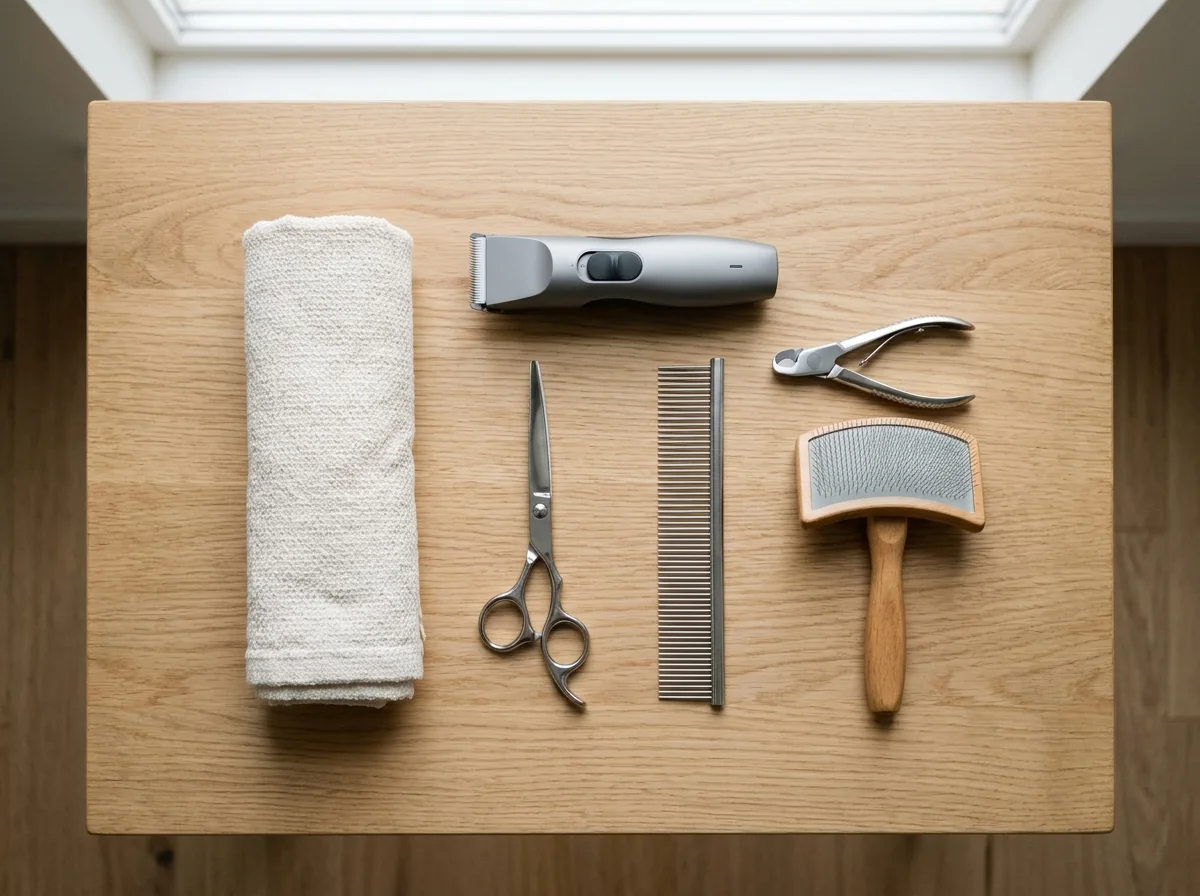
The Fundamental Clipper Number Rule
On universal A5-type animal clipper blades (Wahl, Andis, Oster, Heiniger, Buttercut), the higher the blade number, the SHORTER the coat left behind. A #40 surgical blade leaves almost bare skin (0.25mm), whereas a #3F blade leaves a plush half-inch (13mm) of fur. Note: Clipper cuts always measure slightly shorter if skimmed against the grain (reverse)—all lengths below assume clipping smoothly with the lay of the coat.
1. Complete A5 Detachable Clipper Blade Chart (#40 Through #3F)
Whether you are communicating clearly at salon drop-off or maintaining a single pet at home with a two-speed A5 clipper, bookmark this reference table:
| Blade Number | Coat Length Left (With Grain) | Safety Rating | Authorized Salon & Home Uses |
|---|---|---|---|
#40 (Surgical) |
0.25 mm (1/100 in.) | Veterinary / Extreme Mat Emergency Only | Veterinary surgical site prep and rock-hard cast pelts fused flush against skin where even a #10 cannot slide underneath. High clipper-burn risk; never use on routine sanitary areas or paw pads. |
#30 |
0.5 mm (1/50 in.) | Under Guard Combs Only | The optimal smooth carrier blade snapped underneath stainless steel attachment combs (glides cleaner than a #10 under combs). Too close for bare-blade sanitary work on sensitive skin. |
#15 |
1.2 mm (3/64 in.) | Pro Poodle Clean Face / Feet | Traditional crisp Poodle clean muzzle and clean feet on calm, experienced show/salon dogs. |
#10 |
1.5 mm (1/16 in.) | Safest Close Blade (Gold Standard) | Teeth are spaced tightly together so loose skin folds cannot slip between the comb teeth! Standard safe choice for armpits, groin/sanitary trims, paw-pad scooping, ear margins, and humane de-matting. |
#7F |
3.2 mm (1/8 in.) | High Caution Around Folds! | Short velvety summer kennel trim on smooth torsos. Danger: Tooth gaps are wide enough to suck thin tuck-up flank webs, armpit folds, Achilles tendons, and ear edges straight into the moving cutter! |
#5F |
6.3 mm (1/4 in.) | Moderate (Torso & Legs on Clean Coat) | Tidy sporty short trim on Shih Tzus, Maltese, Yorkies, and Doodles. Coat must be 100% bathed, blown dry, and combed tangle-free first. |
#4F |
9.5 mm (3/8 in.) | Safe on Prepped Coat (Keep Off Folds) | One of the most popular year-round salon body lengths—leaves nearly 1 cm of soft plush coat that moves naturally while staying easy to brush. |
#3F |
13.0 mm (1/2 in.) | Safe on Flawlessly Combed Coat | Longest standard all-steel A5 blade; leaves half an inch of coat. Most groomers today prefer using a 1/2" stainless guard comb over a #30 blade because combs track more evenly and run cooler than heavy #3F steel. |
2. Finish ("F") Blades vs. Skip-Tooth Blades: Why Home Groomers Must Never Buy Skip-Tooth!
When shopping online for a #7, #5, or #4 blade, you will see two versions sold side by side: #7F (Finish / Full-Tooth) and plain #7 (Skip-Tooth). That single letter "F" is the difference between a safe haircut and an emergency room suture visit.
Always verify the capital letter "F" is stamped directly onto your #7F, #5F, #4F, or #3F blade face before turning the clipper on.
Skip-tooth blades were invented decades ago for agricultural livestock shearing and roughing off coarse, dirty terrier coats before the bath—the wide gaps feed thick hair straight onto the oscillating cutter. However, any loose skin wrinkle, nipple, skin tag, flank tuck-up fold, or ear margin drops straight into those wide gaps and gets sliced cleanly before you can blink. Even in professional salons today, virtually all modern pet stylists have retired skip-tooth blades permanently in favor of Finish (F) blades and stainless steel guard combs.
3. Stainless Steel Attachment Guard Combs (3/8" to 1")
Want that fluffy, cuddly 5/8-inch or 3/4-inch Doodle, Bichon, or Shih Tzu teddy bear look? Steel blades max out around 1/2 inch—so groomers snap color-coded stainless steel attachment guard combs onto a short #30 (preferred) or #10 carrier blade:
#1 / E Comb(3/8 in. / 10 mm): Practical low-maintenance plush trim; equivalent to a#4Fblade but safer over seniors and thin skin folds because smooth rounded stainless comb tines shield the cutter.#0 / A Comb(1/2 in. / 13 mm): Classic fluffy year-round companion length; requires thorough home brushing 3x/week.#A / O Comb(5/8 in. / 16 mm) &#C / OO Comb(3/4 in. / 19 mm): Full plush teddy-bear silhouette. Strict prerequisite: A stainless guard comb cannot push through a single pinhead knot! If there is any tangling at the root, the guard comb snags, pulls painfully, and leaves choppy tracks.- Why Stainless Steel Beats Plastic Combs: Cheap plastic clip-on combs bundled with consumer kits bend sideways when pushed through dense Poodle or Spaniel coats, popping off mid-stroke and gouging a bald
#30patch down your dog's back! Invest in spring-loaded, rigid stainless steel snap-on combs (such as Wahl or Andis universal stainless sets) and always test that the spring latch is seated firmly on both ears of the#30blade before clipping.
4. Friction Heat & Blade Maintenance: The 8-Minute Wrist Test
A two-speed rotary clipper oscillates its upper steel cutter back and forth across the lower comb plate at 3,000 to 4,500 strokes per minute. Metal-on-metal friction turns a #10 or #30 steel blade dangerously hot in as little as 6 to 10 minutes—hot enough to inflict delayed thermal clipper burn (which often shows up 24 hours later as weeping red scabs that the dog licks raw!).
- Touch Blade Steel to Your Inner Wrist Every 5 Minutes: Your fingertips have thick calluses that underestimate heat; the sensitive underside of your human wrist mimics canine belly skin. If the blade feels noticeably warm—not even hot—stop immediately!
- Swap to a Fresh Cool Blade on a Ceramic/Stone Tile (Best Method) vs. Aerosol Coolants: Rather than spraying chemical cooling aerosols every three minutes (which wash oil away and irritate airways if overused), professional groomers keep two or three
#10and#30blades on a slab of marble or ceramic bathroom tile, swapping the warm blade onto the cool stone to sink heat passively while continuing with the fresh cool blade! - Oil Every Blade Before & After Every Use: Place 3 tiny drops of sterile clipper blade oil across the teeth tracks and side rails while running for 5 seconds, then wipe excess off with a lint-free cloth. Dry un-oiled blades heat up 3x faster and pull hair! Note: Ceramic-cutter blades still heat up eventually—they simply conduct heat slower, meaning once hot, they also stay hot longer!
5. The 4 Professional Grooming Shears & Where Each Belongs
Never trim a pet with household paper or kitchen scissors—paper dulls edges instantly, causing the blades to fold and yank sensitive facial hair. Professional pet stylists rotate four specialized shears (always using ball-tip safety shears inside eye corners, between toes, and around wiggly puppies):
- Straight Shears (7.0"–8.5"): Used to set crisp straight column lines down Poodle/Bichon legs, scissor level underlines along the chest, and tidy straight terrier furnishings.
- Curved Shears (6.5"–8.0", 25°–40° arc): Engineered to sculpt rounded geometry effortlessly—teddy-bear round cheeks, domed Bichon/Poodle topknots, rounded "cat feet" around toes, and tight angulation curves at the hock and chest.
- Chunkers (18–26 Wide T-Shaped Teeth): Take off ~40–50% of hair per snip while leaving soft, airy texture rather than harsh straight scissor marks—the secret behind effortless, natural-looking Goldendoodle and Spaniel plush trims!
- Blenders / Thinners (40–54 Fine Micro-Serrated Teeth): Remove only ~15–25% of bulk per snip; used exclusively to erase visible clipper-to-scissor transition lines (such as blending a clipped neck seamlessly into a fuller head) and soften bulky ear edges without changing overall length.

Written by Sarah Jenkins
Sarah trains pet owners and apprentice bathers on safe blade selection, friction-heat prevention, and injury-free shear mechanics. Read full bio & credentials →