
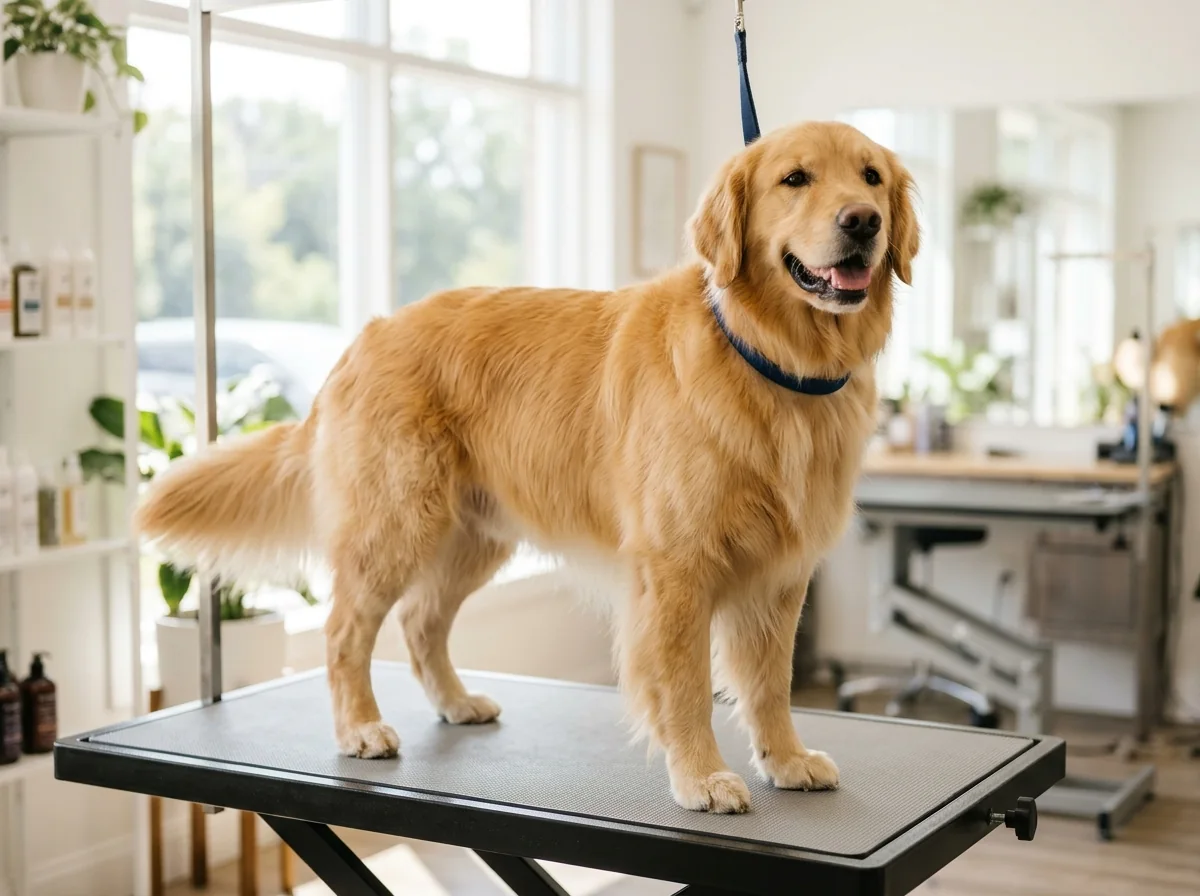
1. Anatomy of a Compound Follicle: Guard Hairs vs. Undercoat
Unlike Poodles or Yorkshire Terriers (whose hair follicles grow continuously in a long anagen phase like human scalp hair), double-coated breeds have telogen-dominant determinate coats growing from compound follicles. Every single pore contains:
- 1 Primary Guard Hair: Stiff, glossy, pigmented, lightly oily shaft engineered to shed rain, block harmful UV rays from pale unpigmented skin, repel burrs/dirt, and tent slightly off the body via tiny arrector pili muscles to create a convective cooling air channel.
- 5 to 15 Secondary Undercoat Hairs: Fine, crimpy, non-pigmented wool down that traps insulating air in winter—and is designed by photoperiod (daylight length, not just temperature!) to detach and "blow" twice a year.
2. Three Reasons Shaving a Double Coat Backfires
- You Do Not Stop Shedding—You Create Millions of Tiny Carpet Needles: Shaving a Labrador or Husky does not change follicle count or shedding cycles. Instead of shedding 2-inch clumps you can sweep up easily, the dog sheds millions of
3mmprickly splinters that weave permanently into upholstery and car seats. - Coat Texture Destruction & "Velcro Fuzz": Secondary undercoat grows rapidly, while primary guard hairs grow slowly on seasonal hormone cues. When clipped down with a
#7or#5blade, fuzzy undercoat shoots up first and crowds the pore opening, choking out guard hairs. The coat grows back dull, patchy, frizzy, and magnetic to mud, water, and burrs—causing the dog to mat 5× worse than before! - Post-Clipping Alopecia (Clipper Alopecia) & UV Damage: Particularly in Nordic/Spitz breeds (Pomeranians, Siberian Huskies, Samoyeds, Chow Chows, Malamutes, Keeshonds) and dogs over age 6, follicles resting in prolonged telogen phase may suffer thermal/vascular shock after shaving and fail to re-enter growth phase for 12 to 36 months—or permanently. Meanwhile, pink canine skin with zero melanin history burns rapidly under summer sun.
Shaving a double-coated dog is strictly justified only when: (1) Severe, painful root-level pelting makes brushing inhumane (humanity always overrides coat preservation), or (2) Veterinary medical necessity (treating widespread acute moist dermatitis/hot spots, surgical prep, or palliative comfort for an immobile geriatric dog who can no longer stand for 45-minute blowouts).
3. The Salon "Close-Open-Close" De-Shedding Protocol
Why does a professional deshedding session remove a trash-bag full of fluff without pulling a single live hair? Because we let water pressure, lipid slip, and velocity airflow do the heavy work instead of dry-raking:
- Step 1 — Clarifying Warm Shampoo (Open the Pore & Cuticle): Pre-diluted degreasing or amino-acid deshedding shampoo dissolves sticky sebum gluing dead undercoat tufts inside compound follicles.
- Step 2 — Heavy Humectant Conditioner Soak (Lubricate & Release): Coat the dog generously in conditioner—working it down to the skin on the neck ruff, chest, flanks, rump, and tail—and let it sit for 5 to 7 full minutes. If you own a variable-speed velocity dryer, you can even blow through the conditioned coat right in the tub ("dirty/wetHV method") to slide loose wool straight down the drain trap!
- Step 3 — Thorough Cool-Warm Rinse (Close the Cuticle): Rinse with slightly cooler lukewarm water until sleek and residue-free.
- Step 4 — High-Velocity Cool-Air Blowout: Sweep the flat concentrator nozzle back and forth 3–4 inches off the skin. You will literally watch impacting grey/white undercoat clouds lift cleanly away from healthy, shiny guard hairs.
- Step 5 — Light Undercoat Rake & Outline Tidy ONLY: Finish with a rounded-pin rake and Greyhound comb, scoop paw pads cleanly with a
#10blade (dogs dissipate heat through merocrine sweat glands in paw pads!), do a neat#10sanitary hygiene pass, and lightly scissor wispy hock/belly split ends—never cutting into the main jacket.
4. Safe Weekly Tools vs. Coat-Cutting Blades
| Tool Type | Verdict on Double Coats | How to Use Safely |
|---|---|---|
| Rotating/Rounded-Pin Undercoat Rake | ✓ Best Primary Home Tool | Glides through thick Goldens, Aussies, Huskies, and Shepherds lifting only detached wool without slicing guard hairs. |
| Long-Pin Slicker + Greyhound Comb | ✓ Essential for Feathering | Use on ear fringes, chest bib, leg furnishings, and tail plume where rakes can snag thin skin. |
| Sharp Bladed Strippers / #40 Edge Tools | ⚠️ Use Sparingly or Avoid on Long Coats | Fine stainless clipper-tooth edges physically cut topcoat hairs and abrade hip bones if scraped repeatedly over the same spot. |
Written by Sarah Jenkins
Sarah helps coastal Golden Retriever, Husky, and Shepherd owners prevent summer hot spots and manage heavy seasonal coat blowouts without clippers. See Case Study #4 →